



Introspectus is Heading to AHRI VIC Conference 2026!
Introspectus is Heading to AHRI VIC Conference 2026! Helping to break the cycle of homelessness We’re thrilled to share some exciting news

Introspectus is Heading to AHRI VIC Conference 2026! Helping to break the cycle of homelessness We’re thrilled to share some exciting news

Help Me Make a Difference This CEO Sleepout Helping to break the cycle of homelessness This year, I’m proud to be representing

Operational Insight and Software Assurance. Coming soon Two New Additions Are On The Way We are pleased to share that development is
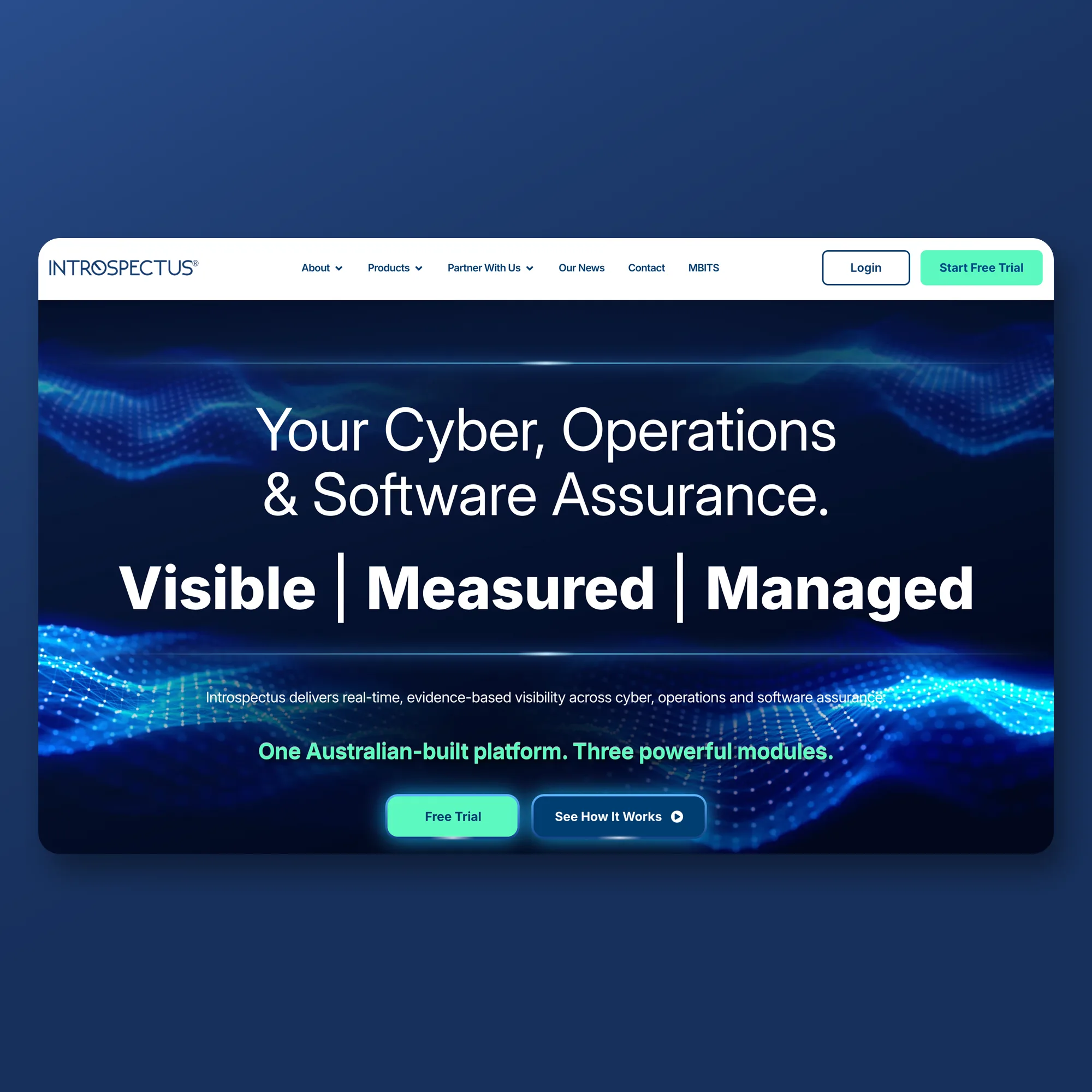
A new home for Introspectus. Our website is taking shape Our New Website is Lauching Soon Behind the scenes, we have been
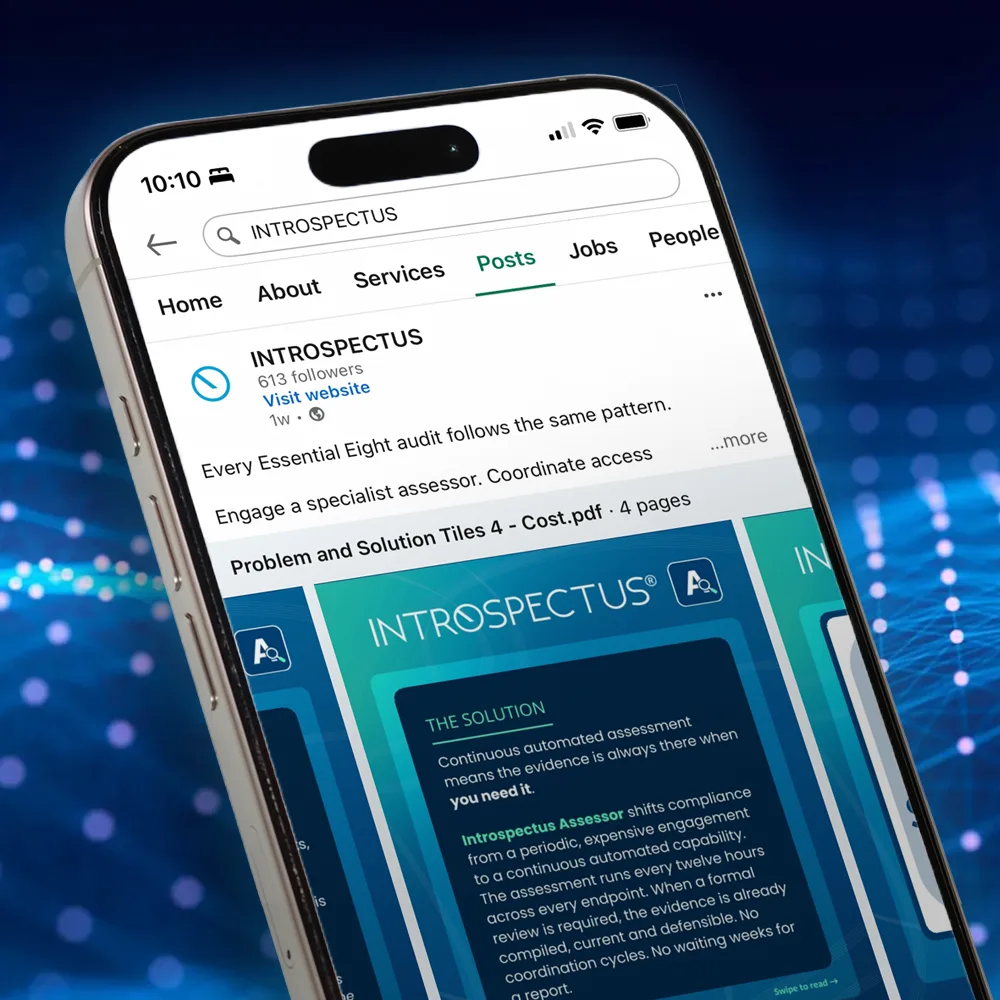
Follow our journey on LinkedIn Follow Our Journey and Stay Informed We have been active on LinkedIn, sharing updates on our platform

Staying Sharp: The Benefits of Maintaining Maturity Level Two in the Essential Eight Part 5 in a series Staying Sharp: The Benefits

Top 5 Take-Aways from our Importance of Executive Support for the Essential Eight Webinar Part 4 in a series Top 5 Take-Aways

Webinar: The Importance of Executive Support for the Essential Eight Listen up C-Suite. If you missed our Cyber Security Webinar, ‘The Importance

Completing the Picture: How Agent-Based Testing Enhances SIEM and SOAR Part 3 in a series Cyber Security – The Importance of Executive

The Missing Piece in Essential Eight: Executive Support and Timely Resourcing Part 2 in a series Cyber Security – The Importance of

Inside the Mind of an Attacker: Helping You Strengthen Your Essential Eight Defences Part 1 in a series Cyber Security – The
Each agent compares the current patch list against what is actually installed on its device. Any gap between what has been released and what is deployed is immediately surfaced. Critically, Introspectus pays particular attention to the timing of patch deployment not just whether a patch is present, but when it was applied.
This temporal dimension is central to Essential Eight compliance, where the difference between a patch applied on day two versus day thirty can mean the difference between maturity levels, and between an environment that was protected and one that was exposed.
This combination of daily patch intelligence, severity-based filtering, agent-level validation, and deployment timing analysis gives organisations a real-time, evidence-based view of their operating system patch posture mapped directly to the ISM controls applicable to the Essential Eight patch operating systems strategy.
The visibility gap here is particularly consequential. A patch may be approved and scheduled, yet never successfully applied due to a failed deployment, a device that was offline during the maintenance window, a reboot that was deferred, or a system that exists outside managed channels entirely.
Organisations that rely solely on deployment tooling to confirm patch status are measuring intent, not reality. The ACSC is explicit on this point: organisations need to confirm patches have been applied successfully, not merely that they were dispatched.
Within the Essential Eight framework, patching operating systems is a core and non-negotiable control. The ACSC sets clear expectations: patches for internet-facing infrastructure must be applied within 48 hours when identified as critical or where working exploits exist, and within two weeks for standard releases.
Patches for workstations, servers, and network devices must be applied within one month, with tighter timeframes applying in high-threat environments. Critically, the ACSC also mandates that vulnerability scanning occurs at least daily for internet-facing systems and at least fortnightly for workstations and non-internet-facing infrastructure not to replace patching, but to confirm it has actually occurred.
From this inventory, Introspectus performs targeted web intelligence gathering. For each application identified, the platform locates the top five authoritative sources of patch and release information vendor security advisories, release notes, and vulnerability databases and retrieves that content into a central repository.
Aletheia, Introspectus’s AI analysis agent, then reads and analyses this content to extract the intelligence that matters for application patching: the latest available version, whether a release addresses a security vulnerability, the severity of that vulnerability, and all information relevant to the Essential Eight application patching requirements. This structured intelligence is mapped directly to the applicable ISM controls, producing defensible, audit-ready evidence of an organisation’s application patch compliance posture.
A critical and frequently overlooked problem is the visibility gap. Organisations may believe their applications are current when, in reality, patches have silently failed, devices have missed deployment windows, or software has been installed outside of managed channels entirely.
Without continuous inspection at the endpoint level, these gaps go undetected until an audit or, worse, a breach.
Within the Essential Eight standard, patching applications is a dedicated and non-negotiable control. The ACSC specifies clear timeframes: critical vulnerabilities in internet-facing services must be addressed within 48 hours, commonly used applications such as office productivity suites, web browsers, email clients and PDF software must be patched within two weeks of release, and all other applications within one month.
For organisations in high-threat environments, the bar is higher still. Meeting these requirements consistently across hundreds of distinct applications deployed across thousands of endpoints is not achievable through manual effort alone.